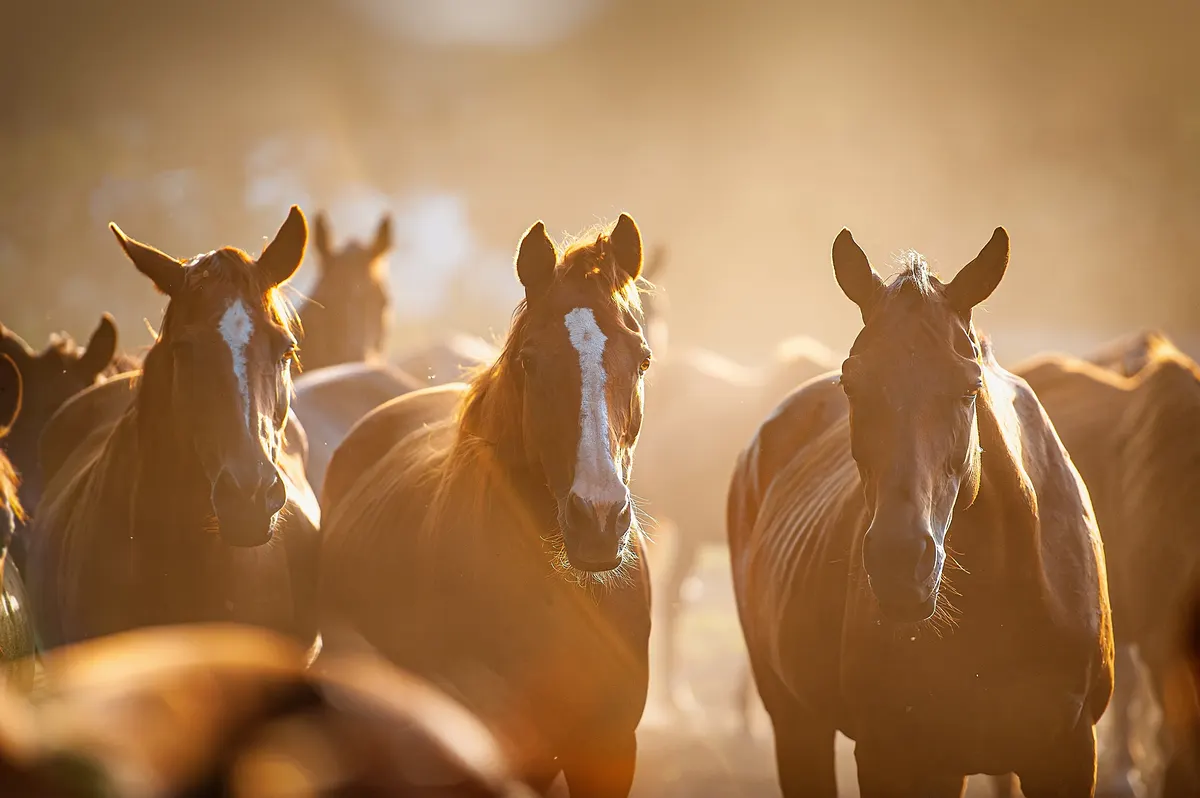
Racehorses galloping on turf (image)
Miho Village (Mihomura), Ibaraki, Japan

A day trip to the home of Japanese horse racingMiho — Village of Horses

In the village where racehorses are raised, watch the morning workouts, taste horseshoe-shaped sweets and meet real horses up close. About 60 km from Tokyo and roughly 1 hour by car from Narita Airport, Miho Village in Ibaraki is a "village of horses" you can easily visit on a day trip.

Day trip with local guides →Where is Miho?
*Image for illustration only
ABOUT MIHO

What is Miho Village (Mihomura)?

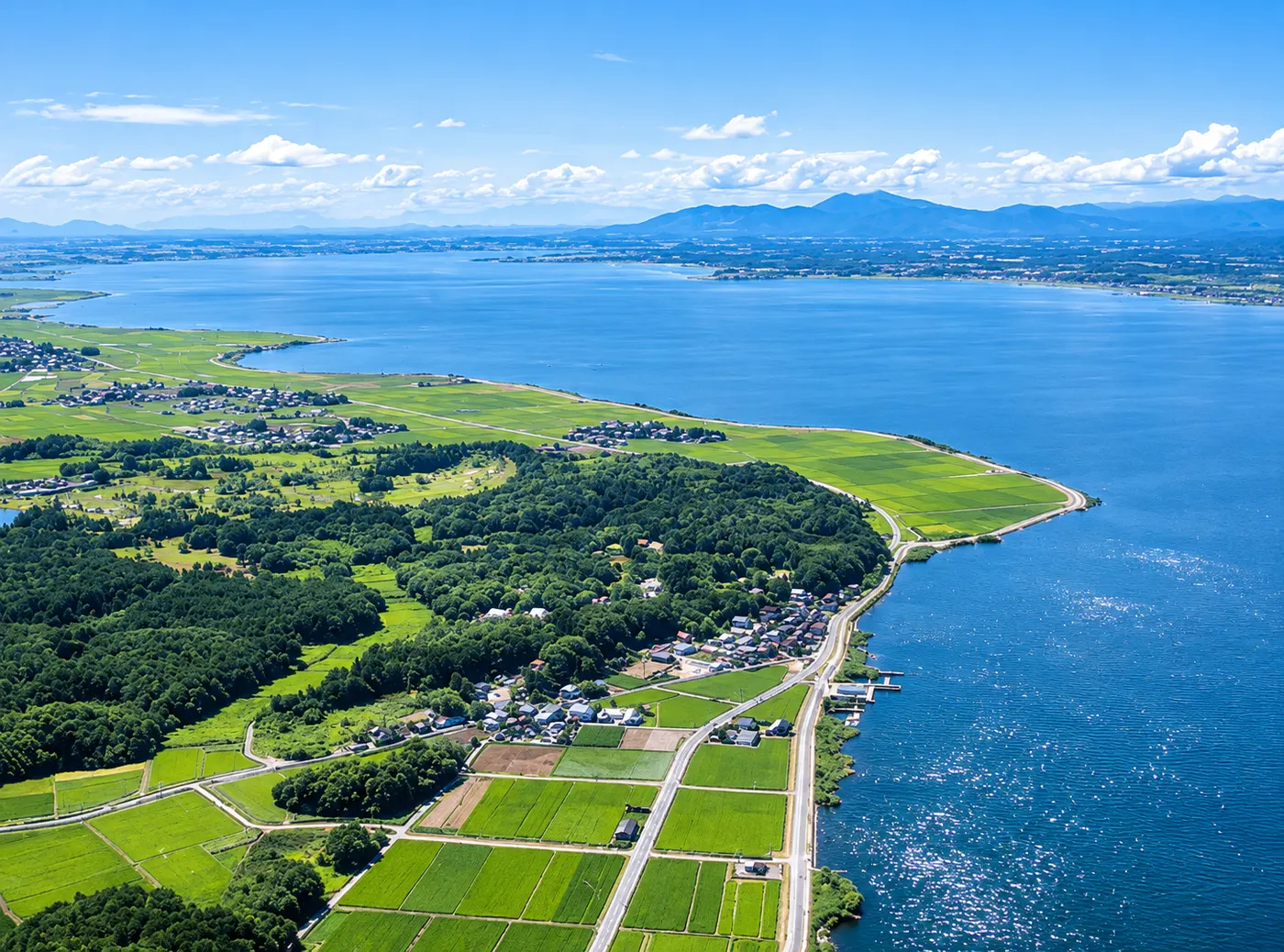
Miho Village — Mihomura (美浦村) in Japanese — sits in southern Ibaraki on the shore of Lake Kasumigaura, Japan's second-largest lake. The lake wraps around the north and east of the village, and roughly half of its 66.61 km² is actually lake surface. About 13,600 people live here (November 2026), and it is one of only two villages left in Ibaraki Prefecture.

Miho is also home to the JRA Miho Training Center, where racehorses from eastern Japan live and train. Around 3,000 people live inside the center — roughly one in five villagers works with horses or belongs to a horse-racing family. Truly a village of horses.

The village lies on the Tsukuba Kasumigaura Ring-Ring Road, a cycling route of about 180 km that circles the lake, so cyclists are a familiar sight along the shore. Miho has 10 "Cycle Support Stations" for riders, including Mihofureai Plaza, home of Mihorse Marché.

~60 kmnortheast of Tokyo
~1 hrby car from Narita Airport
~2,000racehorses at the center
Miho Village farmland on the shore of Lake Kasumigaura
Lake Kasumigaura and Miho Village
🐎 Watch & meet

Racehorse training, Turf Plaza and horse riding — experience the world of racehorses up close.

🍄 Food grown by horses

Straw bedding from the training center's stables becomes compost for mushroom beds and rice paddies. This horse-village cycle gives Miho its mushrooms and "Miho Sodachi" rice.

🚲 Ride the lakeshore

Kasumigaura's shoreline is made for cycling. From the lookout at Kihara Castle Ruins Park you can see the lake and Mt. Tsukuba.

🏺 Touch history

Okadaira Shell Mound, "the birthplace of Japanese archaeology", the ruins of Kihara Castle, and Oyama Lakeside Park with buildings of the former Kashima Naval Air Group.

TRAINING CENTER

Why Miho is the "holy land" of Japanese racing
JRA Miho Training Center

This is where many of eastern Japan's racehorses live and train until race day: the JRA Miho Training Center, known locally as "Miho Tore-sen," opened in April 1978. The famous horses you see racing on TV spend their ordinary days right here, doing their morning workouts in this village.

~2.24km²Total area
about 48 Tokyo Domes
~2,000horsesRacehorses living here
~100Stables (kyusha)
~3,000peopleResidents of the center
(about 1,000 households)

Why is it in Miho?

Racehorses in the Kanto region used to train at racecourses such as Tokyo and Nakayama. But as the number of horses grew, there weren't enough training tracks, and housing was spreading around the courses, so a new training base was planned on a large site. Miho was one of the candidates, and the whole village worked to bring it here. Miho was chosen as the site in 1968; it took about four years to assemble the land, and after construction the center opened in 1978.

Who works here?

  • ~100trainers
  • ~70jockeys
  • ~750assistant trainers
  • ~460stable staff (grooms)

*Approximate figures from the JRA introduction page.

Where do the horses run?

There are six tracks, including turf, dirt, woodchip and Polytrack, plus an uphill gallop (hanro, 坂路) that is 1,200 m long with a 33 m rise. The most popular is the woodchip track, laid with red pine and cedar chips. There are even bridle paths through the woods and an indoor swimming pool for racehorses.

Go early in the morning

Training takes place early in the morning. Typical hours by season: summer 5:00–9:30 / spring & autumn 6:00–10:30 / winter 7:00–11:30.

🌅 Turf Plaza Early Opening — 2nd Wednesday of every month

Open from 15 minutes before training starts until 9:00. No reservation needed.

Opening time (2026)
Nov–Mar6:45
Apr & Oct6:15
May5:45
Jun5:15
Jul–Sep4:45

*The last date in 2026 is Wednesday, December 9. Check the 2027 dates and times on the JRA website (Japanese). Entry may be limited when crowded.

Training tracks and stable area
Training tracks and stables
Horses in the morning light (image)
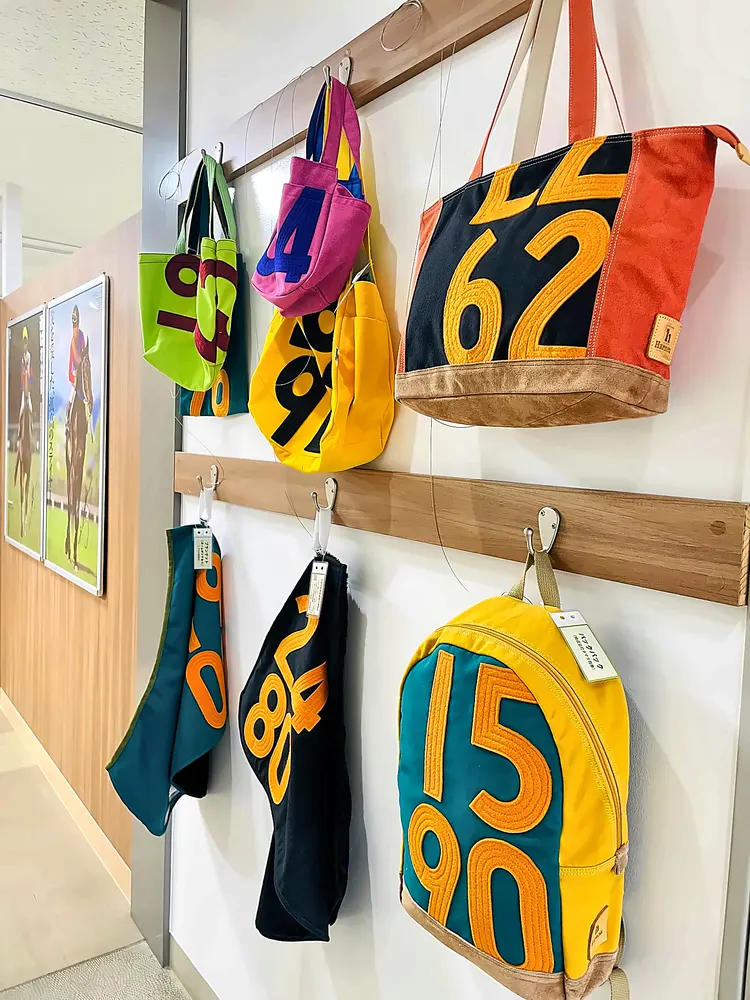
Bags made from racing saddle-cloth numbers
Saddle-cloth bags on display

Training center events

  • Turf Plaza Early Opening2nd Wednesday of every month, no reservation needed
  • Facility toursSee the uphill gallop, pool, training stand, horse vans and more (by lottery)
  • Family Horse DayFeeding, farriery and riding demonstrations, pony rides and more (groups including children 15 and under; by lottery)
  • Uma-BanaTalk events with racing insiders (a few times a year)
  • Miho Village UMA FestaAn autumn festival hosted by the village, with the training center as one of the venues

*Dates and how to apply change every year. See the JRA Miho Training Center events page (Japanese) for the latest information.

HIGHLIGHTS

Things to do in Miho Village

Horses, sweets, history and scenery: discover many sides of the village in a single day.

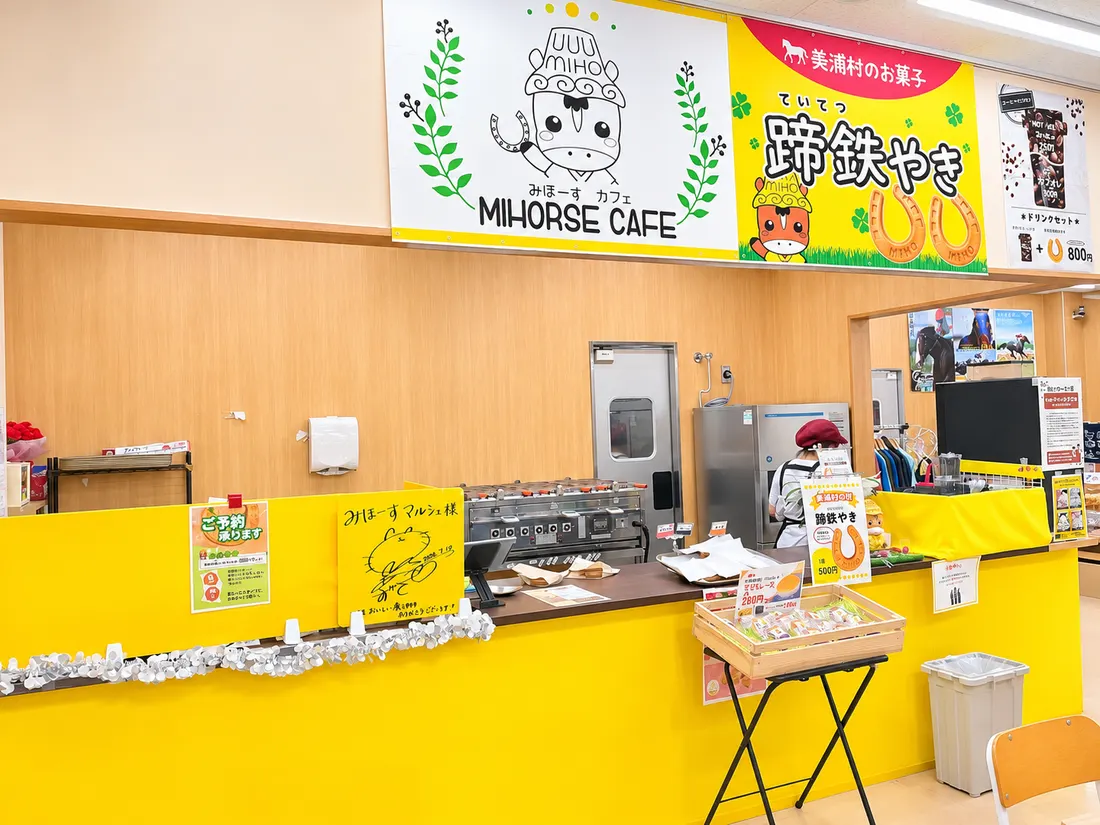
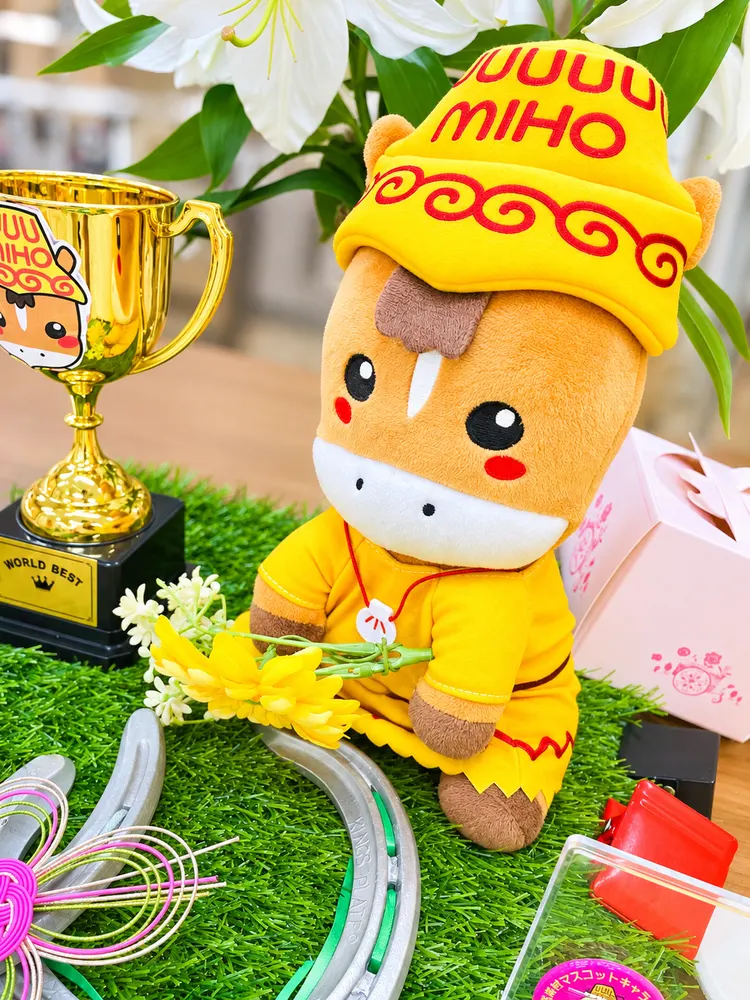
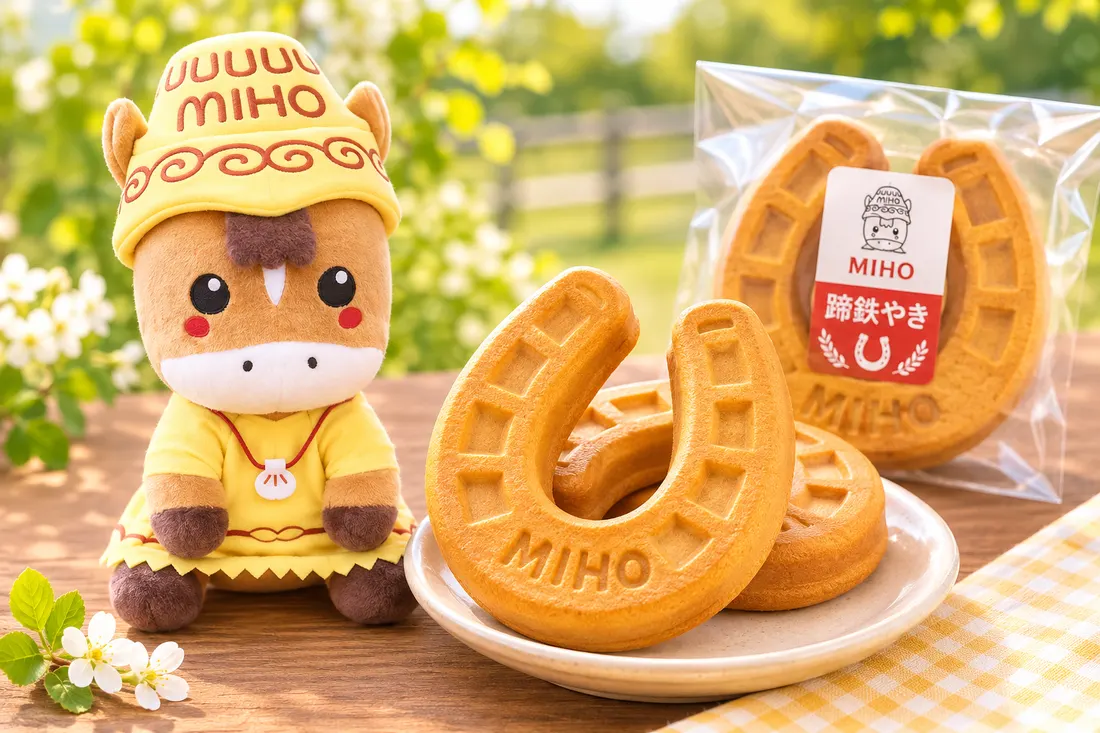
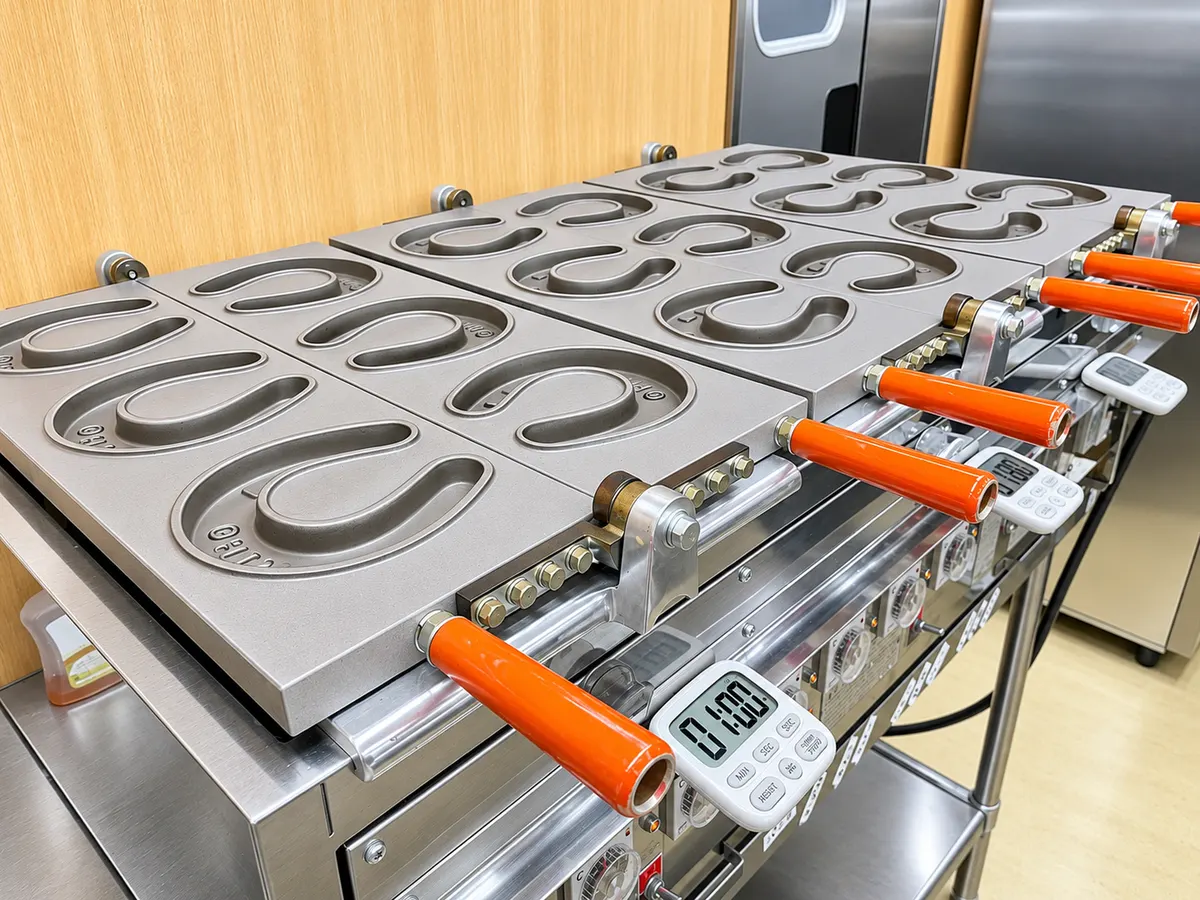
MIHORSE CAFE inside Mihorse Marché Plush toys of the horse mascot character Teitetsu-yaki horseshoe-shaped cakes (illustrative image) Baking mold for Teitetsu-yaki
01

Start at the village market, Mihorse Marché (みほーすマルシェ)Horseshoe cakes, local specialties & horse goods

A farm-direct shop packed with local vegetables, rice, specialty products, and horse-themed goods and snacks. The signature treat at its MIHORSE CAFE is Teitetsu-yaki (蹄鉄焼き), a cake shaped like a horseshoe, the U-shaped metal piece that protects a horse's hoof. Flavors include plain, cheese and strawberry cream.

Horseshoes are also known as good-luck charms, so these make a perfect snack or souvenir. You'll find the village's character goods here too. We recommend asking the staff about the village's highlights before you set off.

Location
Inside Mihofureai Plaza community center
1211-2 Oaza Miyaji, Miho, Inashiki District, Ibaraki
Hours
9:00–19:00 (closed over the New Year holidays)
Phone
+81-29-875-6010

Open in Google Maps →

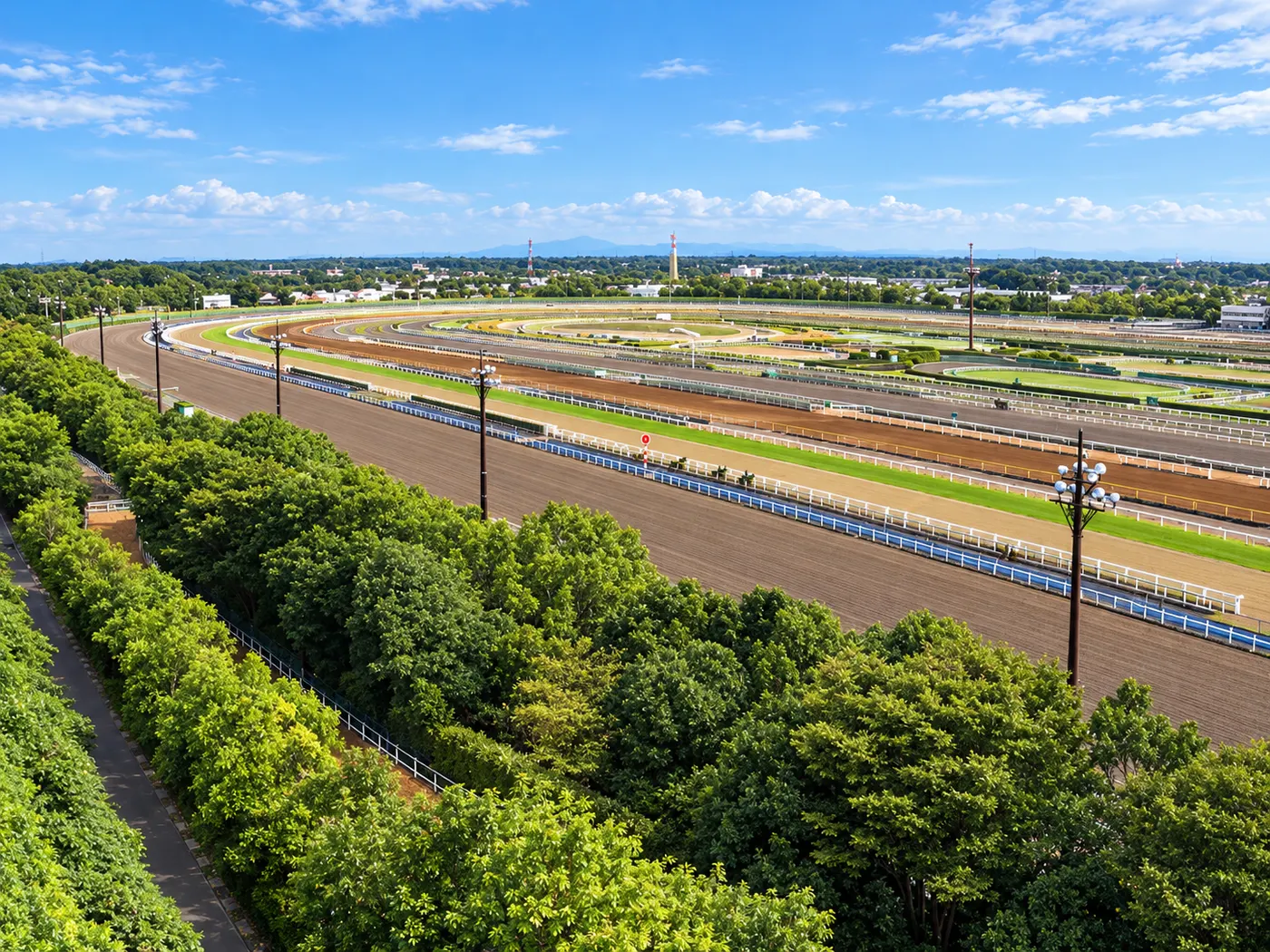
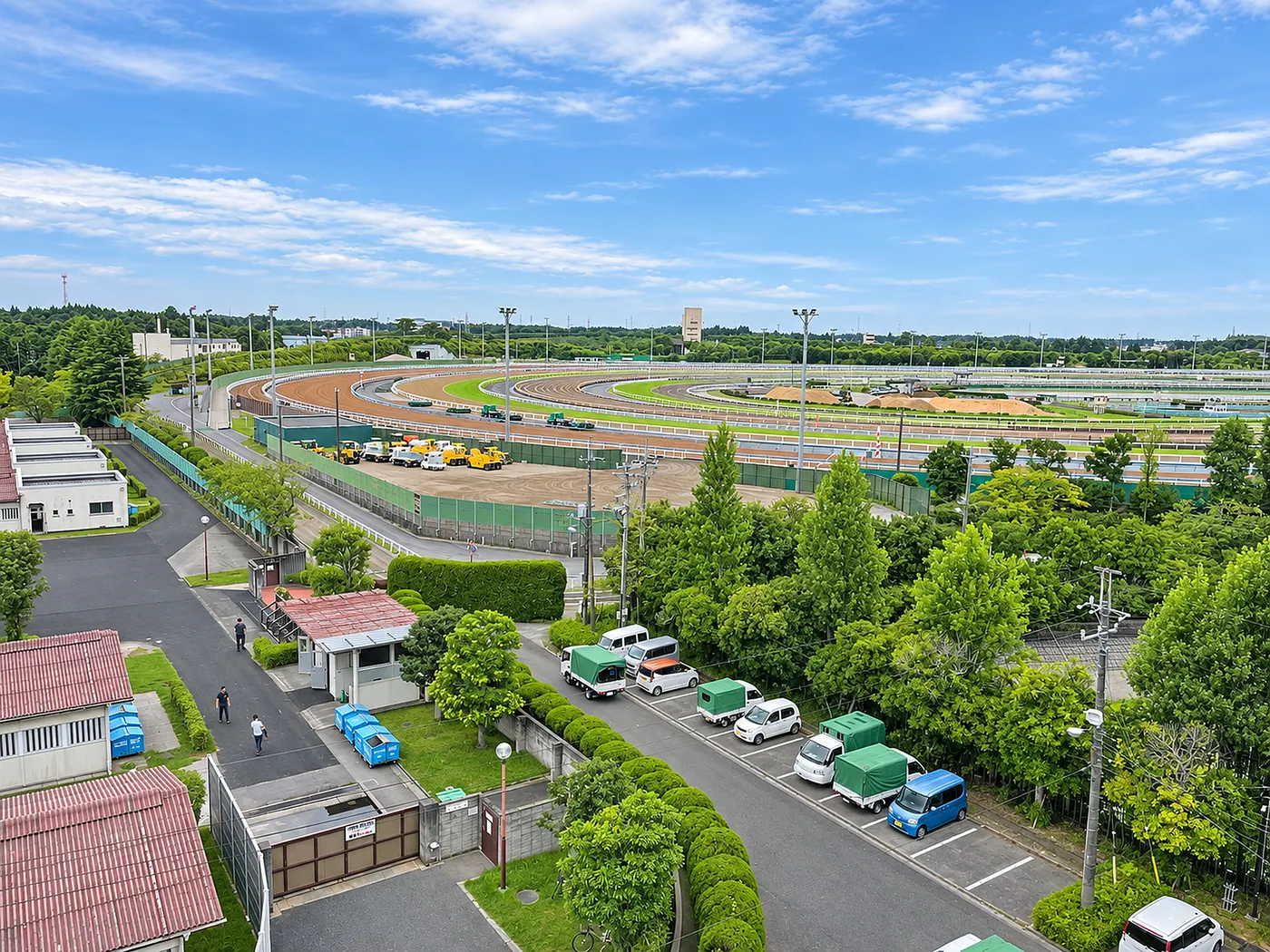
Training track seen from Turf Plaza (image) Horseshoe photo spot
02

Watch racehorses train at Turf PlazaFree admission · Visitor center inside the Miho Training Center

A visitor facility inside the JRA Miho Training Center. Big windows on the 4th-floor observation deck look out over the training tracks, and depending on the time of day you can see racehorses in the middle of their workouts.

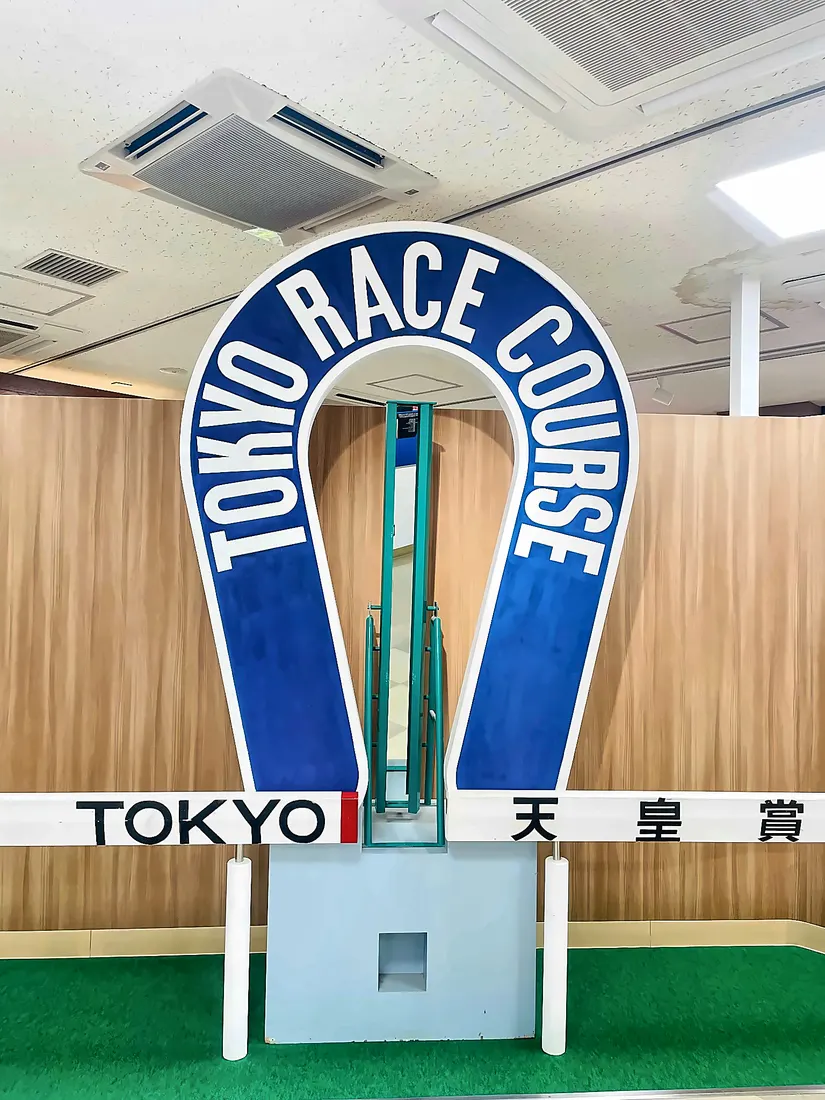
Inside you'll find saddle cloths from Miho-based G1 winners, a replica stall built with real materials, a horseshoe photo spot and more. In the Funtopia garden, the "Wall of Fame" displays plaques honoring Miho's G1-winning horses, trainers and jockeys.

Watch trainingFree admissionPhoto spot
Open
Wednesdays, Fridays and JRA race days (usually Sat & Sun)
Closed over the New Year holidays
Hours
9:00–16:30
Early opening
2nd Wednesday of every month, opens before morning training begins (see times)

*No eating or drinking on the 4th floor. Please follow staff instructions and take photos only in permitted areas. Opening days may change, so check the JRA website (Japanese) before you go.

Getting to Turf Plaza
Address
2500-2 Oaza Mikoma, Miho-mura, Inashiki-gun, Ibaraki 300-0493
(4F, Public Relations Hall, JRA Miho Training Center)
By car
About 8 km (15 min) from Inashiki IC or Ami-Higashi IC on the Ken-O Expressway
About 23 km (35 min) from Sakura-Tsuchiura IC on the Joban Expressway
By bus
From JR Tsuchiura Station, JR Bus Kanto bound for Edosaki, about 40 min; get off at "Toresen-mae"
Parking
Mikoma Parking (free)
Inquiries
+81-29-885-2111 (9:30–12:00, 13:00–16:30; closed Mon, Tue and New Year holidays; Japanese)

Access (JRA official, Japanese) → Course map (JRA) →

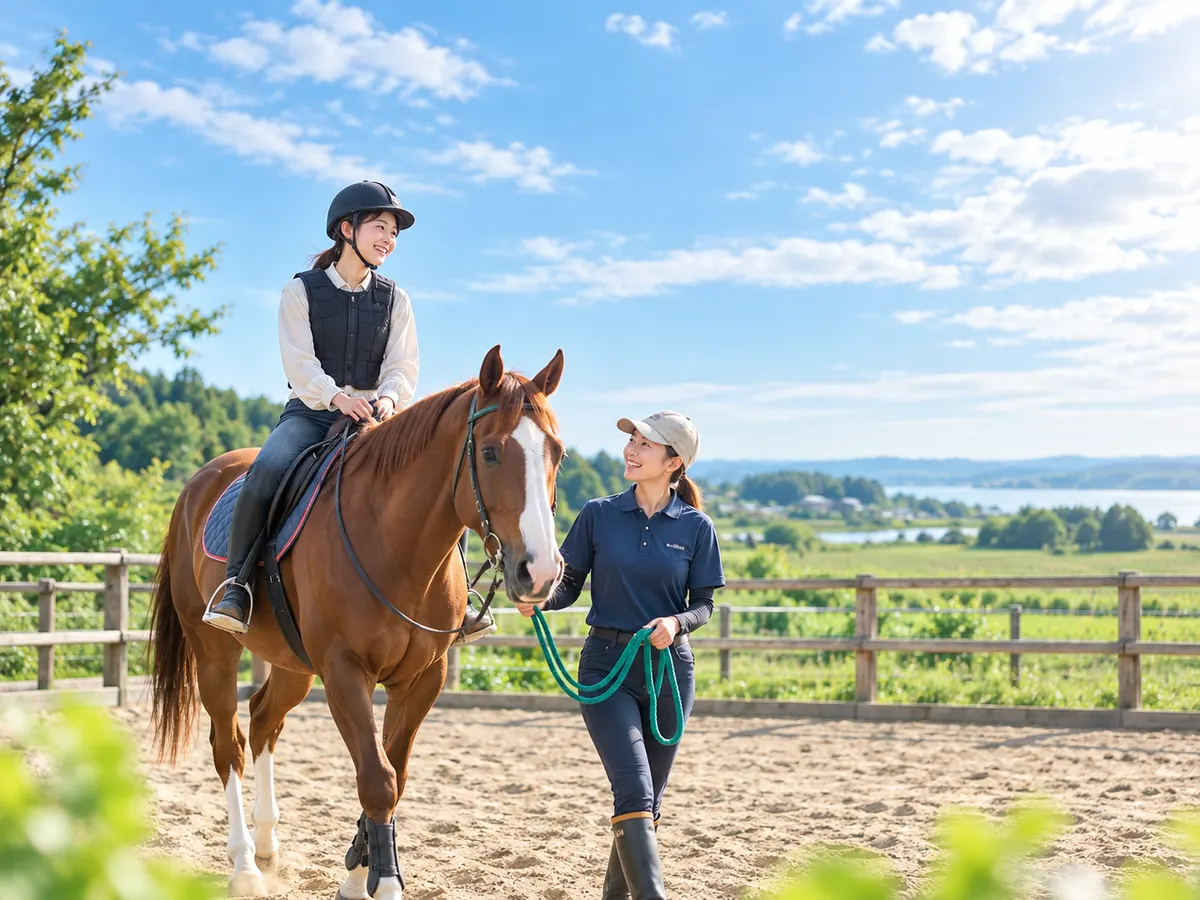
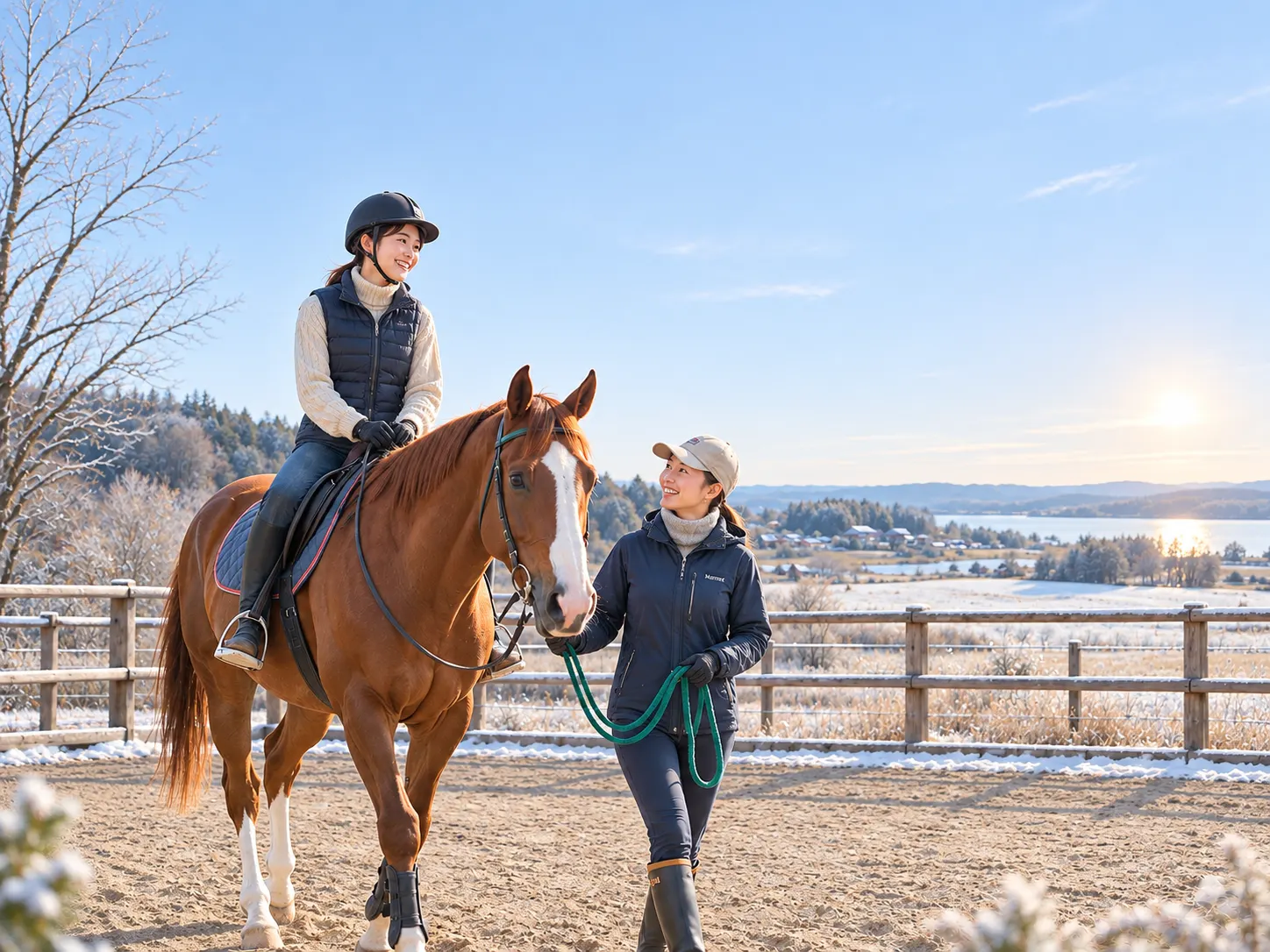
A trial horse ride in the riding arena
03

Horse riding experience with real horsesLed rides, perfect for first-timers

When you're in a village of horses, you'll want to ride one. Wearing a helmet and safety vest, you'll take a led ride with a staff member guiding the horse, so even complete beginners can relax. Spending time with the horses in the stable is part of the fun too.

On the "MIHO Pilgrimage" day trip, you'll ride at a ranch in the village. (Depending on the weather and the ranch's availability, a different ranch offering a similar experience may be used.)

Other riding experiences in Ibaraki

Other riding clubs in Ibaraki Prefecture also offer trial rides, such as Riding Club Crane Ibaraki (Tsukuba City) and Riding Club Crane Ryugasaki (Ryugasaki City). Please contact each club for details and prices.

The riding grounds at JRA Miho Training Center also sometimes hold "Family Horse Day" (by lottery), with horse feeding and trial rides.

Beginners welcomeMeet the horses
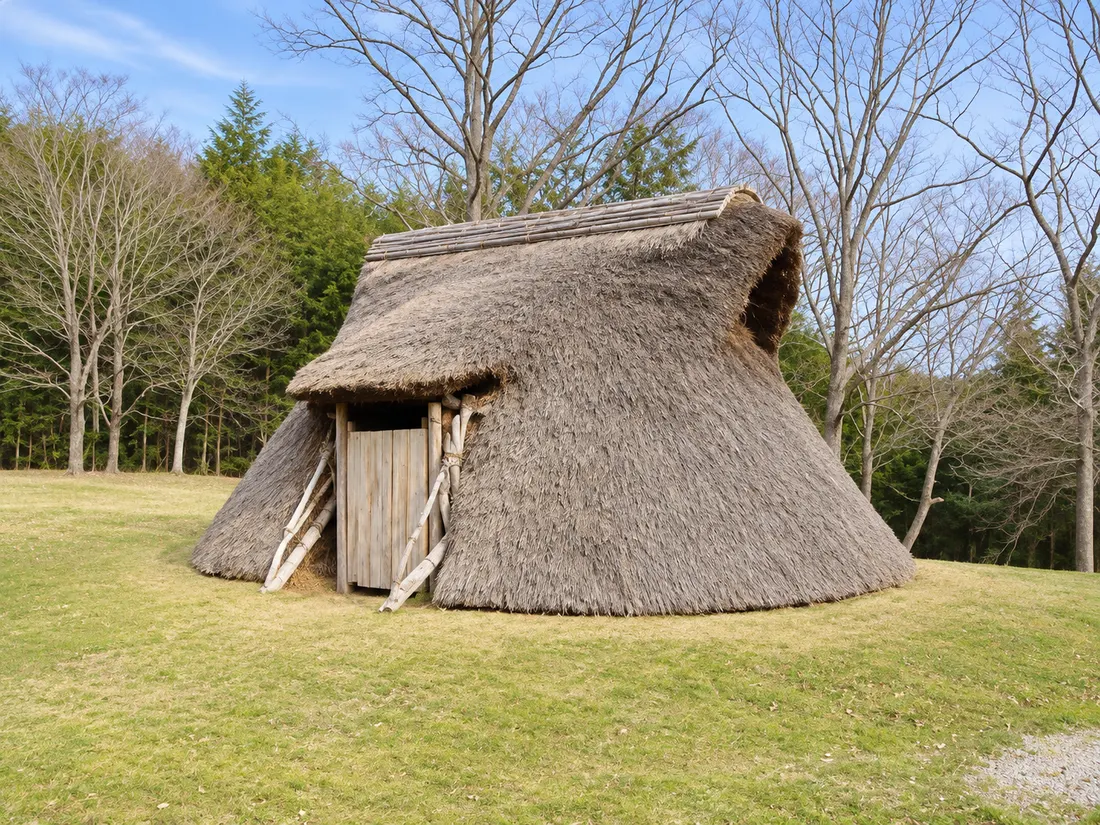
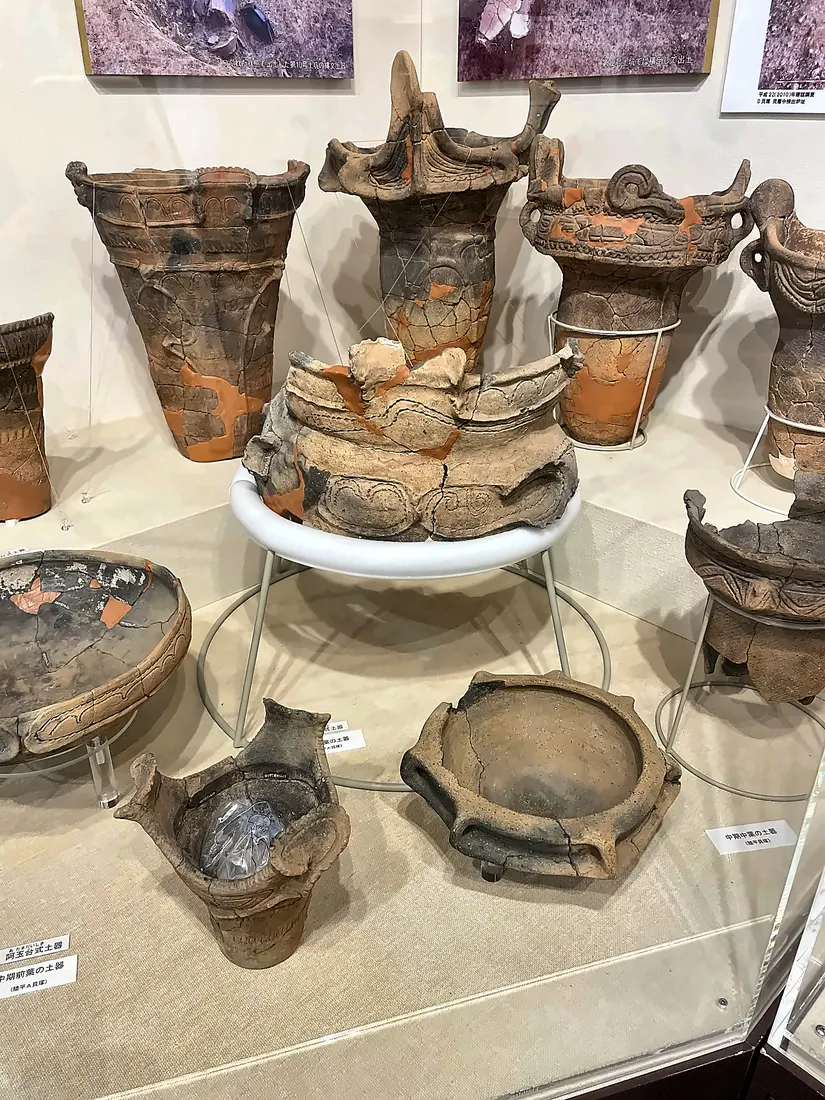
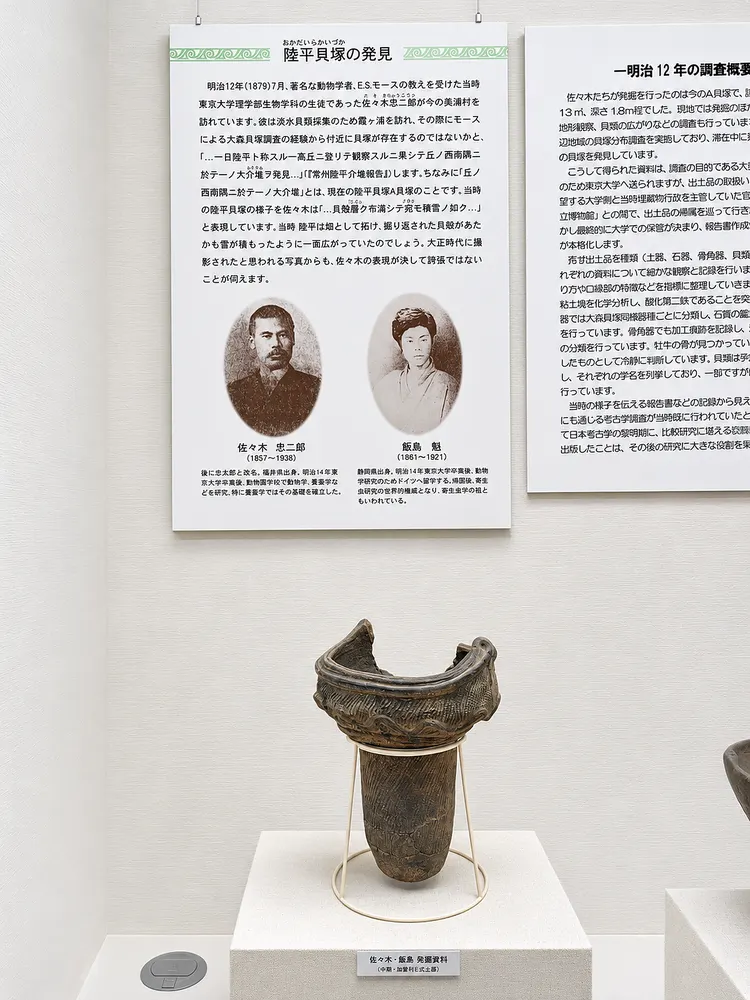
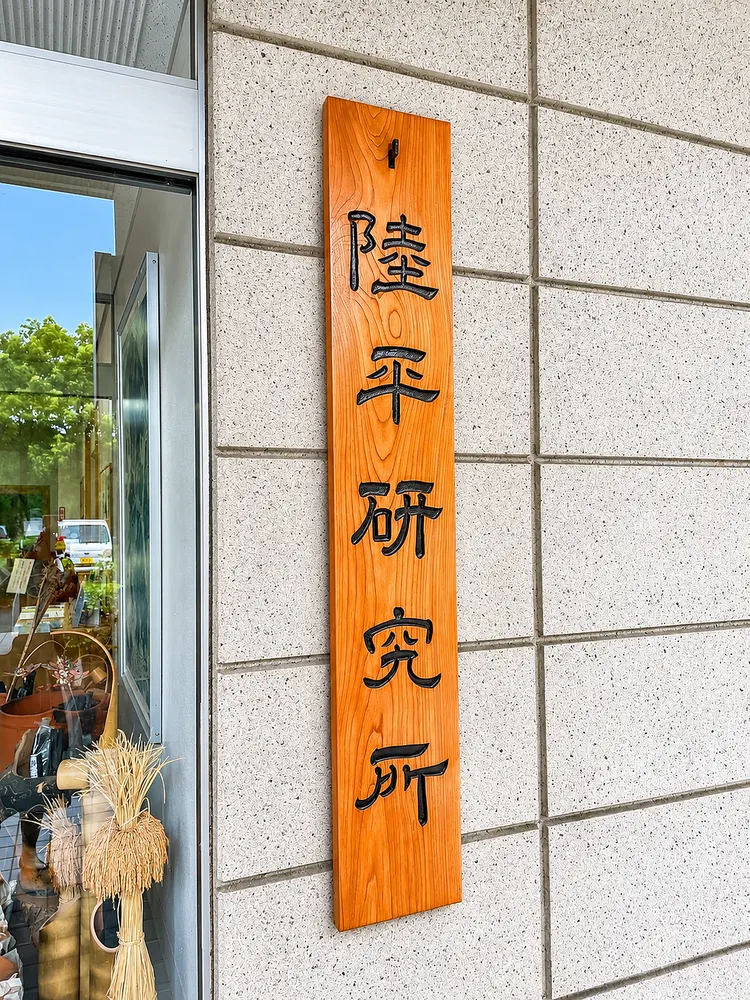
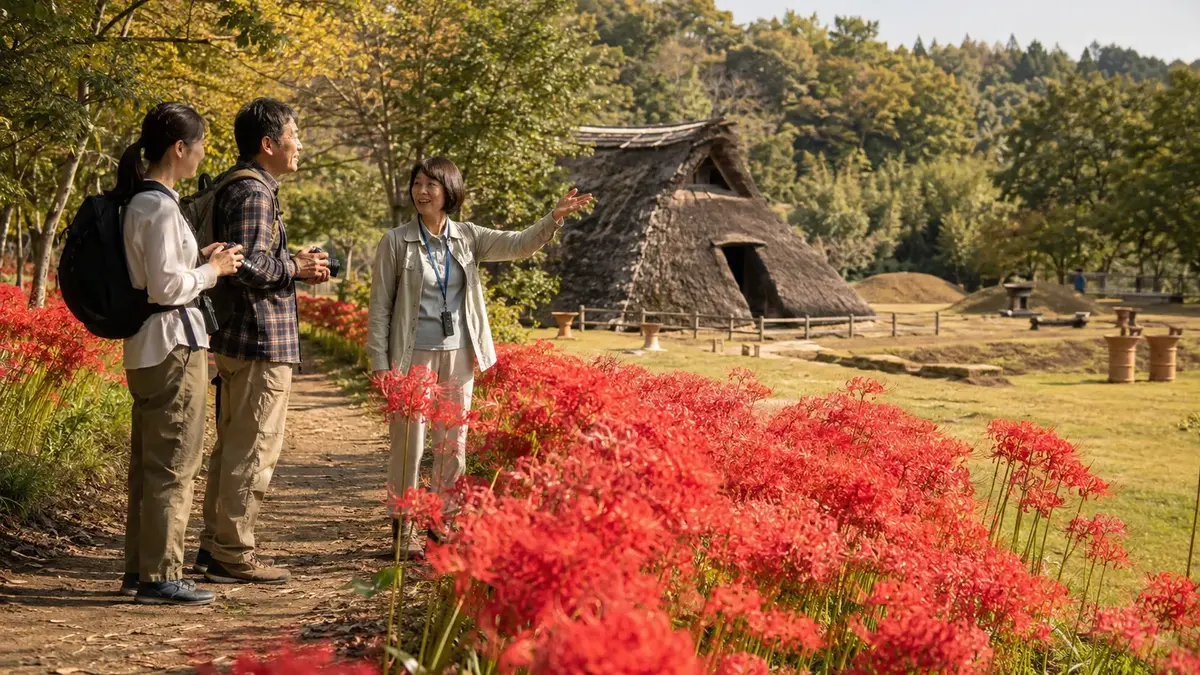
Reconstructed Jomon pit dwelling at Okadaira Jomon pottery on display Exhibit on the discovery of Okadaira Shell Mound Sign of the Miho Village Cultural Property Center (Okadaira Lab)
04

Step into Jomon-era life at Okadaira Shell MoundOkadaira Kaizuka (陸平貝塚) · National Historic Site

Okadaira Shell Mound is a large shell midden from the Jomon period, about 7,000 to 3,500 years ago, and was designated a National Historic Site in 1998. In 1879 it became the site of the first archaeological excavation carried out by Japanese researchers, which is why it's often called "the birthplace of Japanese archaeology."

Nearby, the Miho Village Cultural Property Center (Okadaira Research Institute) displays shell layers and pottery. On the lawn you'll find a reconstructed pit dwelling, the type of house people lived in during the Jomon period.

National Historic SiteMuseumPit dwelling
Cultural Property Center
9:00–17:00 (closed Mondays, national holidays and New Year holidays)
2359 Tsuchiura, Miho Village +81-29-886-0291
Walking through a park full of red spider lilies
*Image for illustration only
05

Fields of red spider lilies in autumn at Hikari to Kaze no Oka ParkWalks & photo spots

A spacious 16.7-hectare park where you can relax under wide-open skies. In autumn (around September–October), red spider lilies (higanbana) carpet the grounds, making it a popular photo spot. There are also log-cabin-style lodges, a campground and a disc golf course.

WalksAutumn spider liliesPhoto spot
LOCAL FOOD

Local specialties, grown with help from horses

Miho is also a farming village. Straw bedding used at the training center is turned into compost and returned to the fields and rice paddies, a cycle unique to a village of horses that gives local produce its flavor. For souvenirs, head to the farm-direct shop Mihorse Marché, renovated in April 2026.

The horse village's straw cycle
  1. 1The training center's stables produce lots of used straw bedding every day
  2. 2The straw is fermented into mature compost
  3. 3The compost feeds mushroom beds and rice paddies
  4. 4Out come Miho mushrooms and "Miho Sodachi" rice
Rice

Koshihikari rice: Miho Sodachi & Hikari Itten

Miho Sodachi is Koshihikari rice grown with fully matured compost made from the training center's straw bedding, using as few chemical fertilizers and pesticides as possible. It's part of Ibaraki's "Pride of Ibaraki Koshihikari" series. There's also Hikari Itten, a brand of rice dried in the sun.

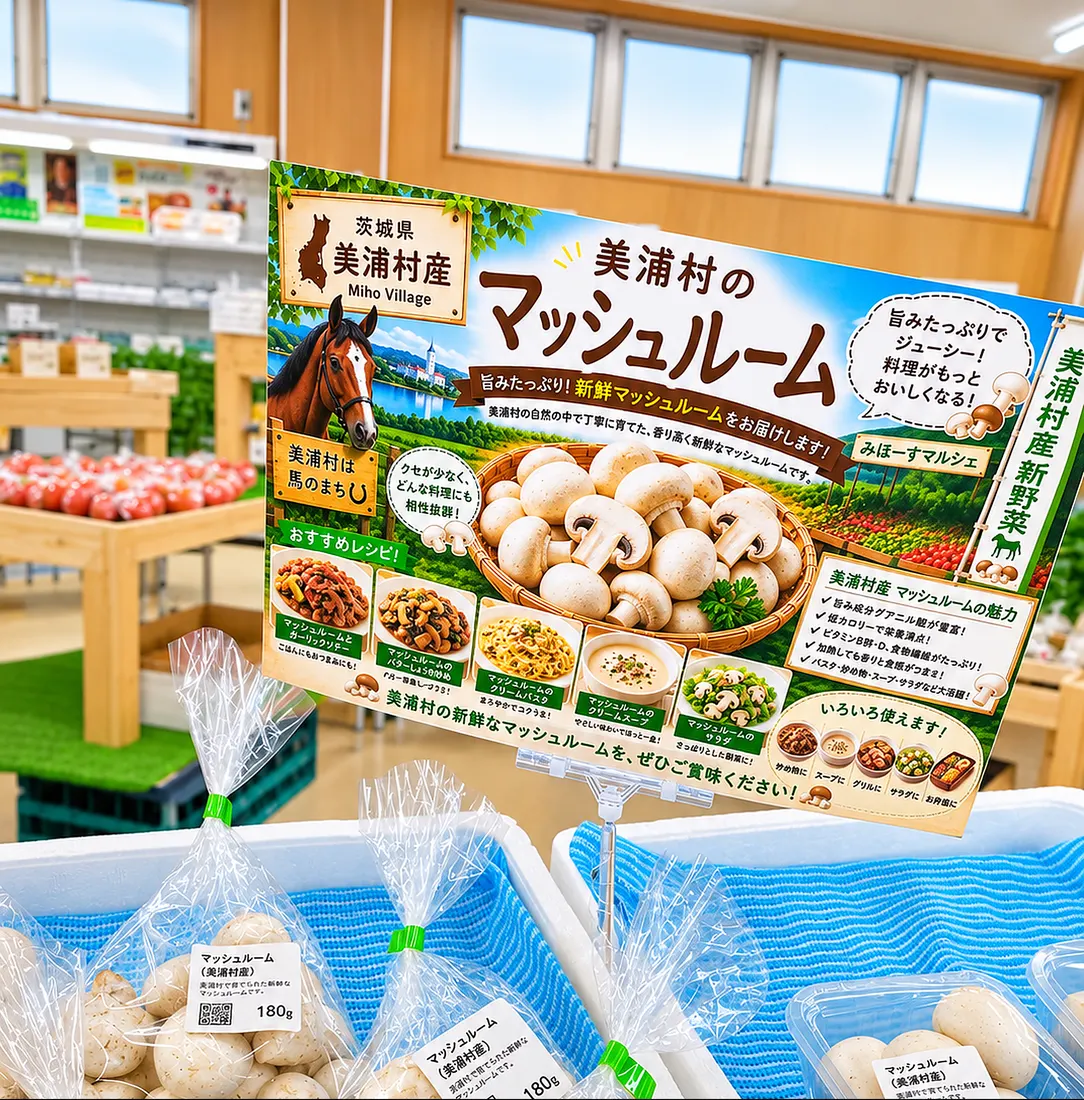
Miho-grown mushrooms on sale at Mihorse Marché
Village icon

Miho-grown mushrooms

The village's signature product, also grown using compost made from the training center's straw bedding. Rich in umami with a mild flavor, they're great in stir-fries, soups, pasta and salads.

Mold for baking Teitetsu-yaki
Sweets

Teitetsu-yaki (horseshoe cakes)

A baked cake shaped like a lucky horseshoe. Buy them fresh from the oven at MIHORSE CAFE. On the day trip, you can even decorate your own.

DAY TRIP

Explore with local guides:
the "MIHO Pilgrimage" day trip

Staff from Mihorse Marché accompany you all day and show you the village's highlights. From decorating your own horseshoe cake to horse riding, the shell mound and Turf Plaza, this small-group day trip packs the best of Miho into one day.

Season
December 2026 – February 2027
Group size
From 2 people
Guide
Accompanied by Mihorse Marché staff
Inquiries
Mihorse Marché official Instagram
(English, Japanese and Traditional Chinese supported)
Online booking
Coming soon on KLOOK
Ask us on Instagram (English OK) →

A sample itinerary

  1. Meet & check in at Mihorse Marché
  2. Set off with your guideLed by Mihorse Marché staff
  3. Teitetsu-yaki decorating experiencePlus souvenir shopping
  4. Hikari to Kaze no Oka ParkRed spider lily fields and photos (lilies in autumn only)
  5. LunchAt Mihorse Marché or another venue in the village
  6. Shell mound experience
  7. Horse ridingAt Miho Horse Club or a ranch of the same level
  8. JRA Miho Training Center – Turf PlazaFacility briefing and visit
  9. Tour ends

*Outdoor activities may change on rainy days. Horse riding may be replaced with a similar activity depending on the weather and the ranch. Inside JRA facilities, please follow staff instructions and take photos only where permitted. Please wear comfortable clothes and walking shoes.

ACCESS

How to get to Miho Village

Miho Village is in southern Ibaraki Prefecture, on the southern shore of Lake Kasumigaura. It's close enough to Tokyo and Narita Airport for an easy day trip.

Location of Miho Village (illustrated map) Miho Village is in southern Ibaraki Prefecture, on the southern shore of Lake Kasumigaura. About 60 km from Tokyo, about 1 hour by car from Narita Airport, and about 40 minutes by bus from JR Tsuchiura Station. Tokyo Bay Tone River IBARAKI CHIBA Lake Kasumigaura Tokyo Sta. Narita Airport JR Tsuchiura Sta. Joban Line Ushiku Daibutsu Miho Village "Mihomura" From Tokyo: about 60 kmAbout 1.5 hrs by car From Narita AirportAbout 1 hr by car From JR TsuchiuraAbout 40 min by bus N *Locations and distances are approximate
Train & busFrom Tokyo or Ueno Station, take the JR Joban Line to Tsuchiura Station (about 1 hr). From Tsuchiura Station, take the JR Bus Kanto "Kasumigaura Line" (bound for Edosaki), about 40 min.
By car (from Tokyo)About 1.5 hrs via the Joban Expressway and Ken-O Expressway. About 10 min from Ami-Higashi IC or Inashiki IC (Ken-O Expwy), or about 30 min from Sakura-Tsuchiura IC (Joban Expwy).
By car (from Narita Airport)About 1 hr (about 25 km in a straight line)

🐴 The village's sights are a little spread out, so a car is handy. Head to Mihorse Marché first for a smooth start.

FAQ

Miho Village travel FAQ

How do you pronounce Miho Village?

It's "Mihomura" (mee-ho-moo-ra) in Japanese. Miho is a village in Inashiki District, Ibaraki Prefecture.

Can I visit Miho as a day trip from Tokyo?

Yes. Miho is about 60 km from Tokyo, around 1.5 hours by car. By train, take the JR Joban Line to Tsuchiura Station, then a bus for about 40 minutes.

Can I watch racehorse training?

Yes. From Turf Plaza (free admission) at the JRA Miho Training Center you can look out over the training tracks. On the second Wednesday of every month it opens early, so you can watch the morning workouts.

Is horse riding OK for first-timers?

Yes. On a led ride, a staff member leads the horse for you, so beginners can relax. You'll wear a helmet and safety vest.

What souvenirs can I buy in Miho?

At Mihorse Marché you can buy Teitetsu-yaki (horseshoe-shaped cakes), rice such as Miho Sodachi, mushrooms, horse-themed goods and more.

START HERE

Your journey starts at Mihorse Marché.

Racehorse training tracks, horseshoe sweets, time with real horses, Jomon-era ruins and rice grown with help from horses. Enjoy all of Miho, the village of horses, on a day trip from Tokyo or Narita Airport.

Ask about the day trip on Instagram →

Read more (Japanese): Ibaraki's horse racing holy land: the charms of Miho Village (Locally)